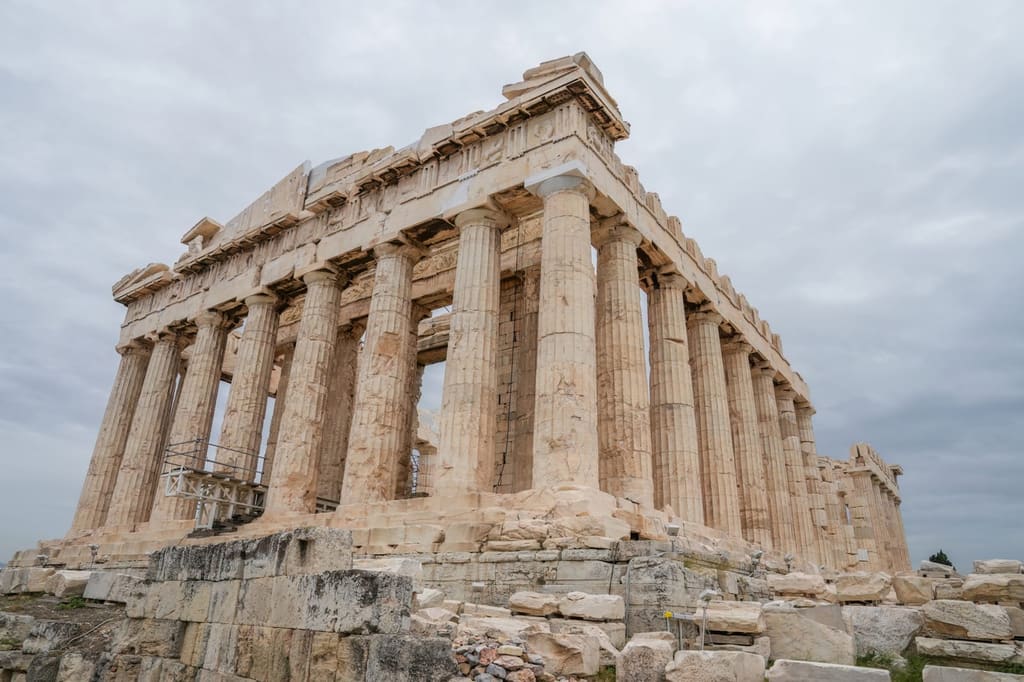
The Parthenon on the Acropolis of Athens.
The short answer: two full days in Athens cover the essentials, and three let you enjoy them. Spend day one on the Acropolis, the Acropolis Museum and the Ancient Agora; day two on the National Archaeological Museum, lunch in Kolonaki and a sunset on Lycabettus Hill; and day three on Roman Athens, the Panathenaic Stadium and the changing of the guard at Syntagma. Book an 08:00 Acropolis slot on the official site, Hellenic Heritage: a full ticket costs €30 all year, and the site opens at 08:00 and closes at 18:30 through 15 October, 18:00 from 16 to 31 October, and 17:00 from 1 November (checked 11 October 2026). Avoid putting museums on a Tuesday.
I have lived in Kolonaki for more than ten years and host guests in two apartments here, and "how many days do we really need?" is the question I hear most often, usually with the suitcases still in the hallway. This is the plan I give them. It starts with the tickets and opening hours, because they decide the order of everything else, then goes day by day and stop by stop, with walking times from Kolonaki, where to eat on the way, and what to do with a fourth day.
Opening hours and prices below were checked on the official sites on 11 October 2026, unless another date is given. They change with the season, so look again before you go.
How many days do you need in Athens?
The historic centre is compact. From Kolonaki Square it is 1.7 km on foot to the Acropolis south slope entrance (about 21 minutes) and 2.1 km to the main west gate (about 26 minutes). Your own pace and the summer heat, not distance, decide how much you fit in.
| Time in Athens | What you can do | My verdict |
|---|---|---|
| 1 day | Acropolis early, the Acropolis Museum, a walk through Plaka, one dinner | Possible, but you see the headline, not the story |
| 2 days | The ancient centre on day one; the National Archaeological Museum and a Lycabettus sunset on day two | Enough for the classics if you start early |
| 3 days | Both days above, plus Roman Athens, the Panathenaic Stadium, Syntagma and a slow Kolonaki morning | What I recommend |
| 4 days or more | Add a day trip: Cape Sounion, Delphi or a Saronic island | A luxury, not a necessity |
So, to quote it in one line: book two nights at the minimum, three if you want to enjoy Athens rather than tick it off.
Before you go: tickets and opening hours
Book the Acropolis for 08:00
The Acropolis sells timed entry: you choose a time slot when you buy, and the ticket is valid for one entry at that date and time (Hellenic Heritage terms of use, checked 11 October 2026). Hellenic Heritage, run by the Ministry of Culture's resources agency ODAP, is the official seller; buy there rather than from look-alike sites. You can change the time slot, up to twice and free of charge, until two hours before your visit; otherwise tickets cannot be cancelled or refunded.
I push every guest towards the first slot of the day. In summer the rock is hot and crowded by mid-morning, and at 08:00 the light on the marble is at its best. On a Sunday, the Presidential Guard raises the flag on the Acropolis at 08:00 (Presidency of the Hellenic Republic), so an early slot may come with a ceremony.
Hours and prices at a glance
| Site | April to October | November to March | Full / reduced ticket |
|---|---|---|---|
| Acropolis | 08:00 to 20:00 April to August; then 19:30 from 1 September, 19:00 from 16 September, 18:30 from 1 October, 18:00 from 16 October | 08:00 to 17:00 | €30 / €15 |
| Acropolis Museum | Mon 09:00 to 17:00, Tue to Sun 09:00 to 20:00, Fri to 22:00 | Mon to Thu 09:00 to 17:00, Fri 09:00 to 22:00, Sat and Sun 09:00 to 20:00 | €20 / €10 |
| Ancient Agora | Same as the Acropolis | 08:00 to 17:00 | €20 / €10 |
| National Archaeological Museum | May to October 08:00 to 20:00 (April 08:30 to 15:30); Tuesday 13:00 to 20:00 | 08:30 to 15:30; Tuesday 13:00 to 20:00 | €20 / €10 |
| Roman Agora and Hadrian's Library | Same as the Acropolis | 08:00 to 15:00 | €10 / €5 each |
| Temple of Olympian Zeus | Same as the Acropolis | 08:00 to 15:00 | €20 / €10 |
| Museum of Cycladic Art | Mon, Wed, Fri, Sat 10:00 to 17:00; Thu 10:00 to 20:00; Sun 11:00 to 17:00; closed Tuesday | Same | €12 / €9 (permanent collection) |
| Benaki Museum of Greek Culture | Mon, Wed, Fri, Sat 10:00 to 18:00; Thu 10:00 to midnight; Sun 10:00 to 16:00; closed Tuesday | Same | €12 / €9 |
| Panathenaic Stadium | March to October 08:00 to 19:00 | November to February 08:00 to 17:00 | €12 / €6 |
| Lycabettus funicular | 09:00 to 02:30 daily | Same | €10 one way, €13 return |
Sources: each site's official page, linked in the table, checked 11 October 2026; the funicular operator's page, checked 10 October 2026. Last entry is 20 minutes before closing at the Ministry of Culture sites and 30 minutes at the National Archaeological Museum. The Ministry sites close on 1 January, 25 March, 1 May, Easter Sunday and 25 and 26 December.
The old combined ticket for the Acropolis and six other central Athens sites was withdrawn in April 2025, so the official portal now sells each site separately. The "combo tickets" you still see online are resellers' packages, priced above the official tickets.
The days that change the plan
- Tuesday: the National Archaeological Museum opens only at 13:00, and the Museum of Cycladic Art and the Benaki are closed. Make Tuesday an outdoor day.
- Monday: the Acropolis Museum closes at 17:00.
- Thursday: the Benaki's permanent collection is free from 18:00 to midnight, and the Cycladic stays open until 20:00.
- Friday: the Acropolis Museum stays open until 22:00 all year.
- Sunday: the full changing of the guard at Syntagma is at 11:00. From November to March, the first and third Sundays are free at the Ministry sites, which means bigger crowds, not a quieter visit.
- Winter afternoons: from November, the Roman Agora, Hadrian's Library and the Olympieion close at 15:00 and the National Archaeological Museum at 15:30. Do them in the morning.
Who gets in free or reduced
At the Ministry of Culture sites (the Acropolis, the Ancient Agora, the National Archaeological Museum, the Roman Agora, Hadrian's Library and the Olympieion), young people up to 25 from EU countries and children under 18 from outside the EU enter free, with a passport or ID card. Visitors over 65 from the EU pay the reduced price from 1 October to 31 May (Ministry of Culture list of free and reduced admission, July 2026). Bring the document: the ticket terms ask you to show valid proof for a free or reduced ticket. The Acropolis Museum, the Cycladic, the Benaki and the Stadium set their own rules.
Day 1: the Acropolis and ancient Athens
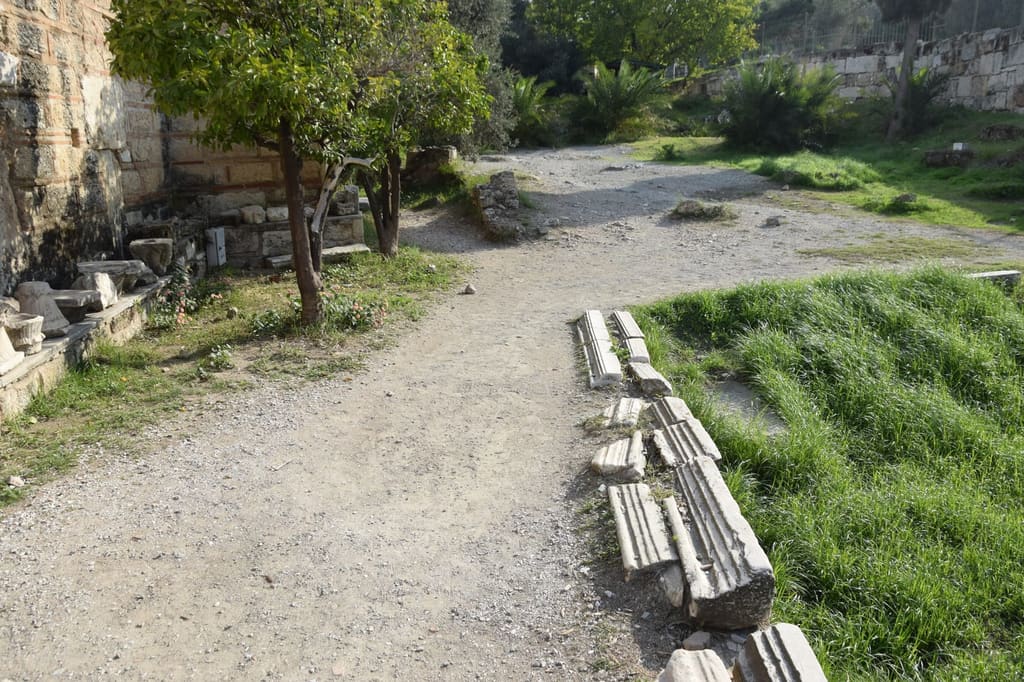
The Ancient Agora of Athens.
| Time | Stop | Getting there |
|---|---|---|
| 07:30 | Leave Kolonaki | Taxi, metro or a 26 minute walk |
| 08:00 | Acropolis | Main west gate |
| 10:15 | Acropolis Museum | 3 minutes from the south slope exit |
| 12:30 | Lunch in Plaka or Makrygianni | A short walk |
| 14:30 | Ancient Agora and the Temple of Hephaestus | About 17 minutes on foot from the museum |
| 20:30 | Dinner in Kolonaki | 23 minutes on foot, or a taxi |
Walking distances on this page come from OpenStreetMap pedestrian routing, checked 11 October 2026, at an easy 4.8 km/h. Add time for the slopes.
07:30 Getting from Kolonaki to the Acropolis
For an 08:00 slot I would take a taxi to the main entrance: Hellenic Heritage puts the drive at about ten minutes from Syntagma, and you arrive with fresh legs. By metro, walk to Syntagma, take line 2 one stop to Akropoli, and walk about 1 km uphill to the west gate. On foot from Kolonaki Square it is 2.1 km, through Syntagma and Plaka.
08:00 The Acropolis
Enter by the main gate at the west end, walk up through the Propylaia, and give the Parthenon, the Erechtheion with its Caryatids and the small Temple of Athena Nike an hour and a half to two hours. The marble paths are polished by millions of feet and genuinely slippery, so wear shoes with grip. Travel light: staff may check your belongings at the gate and can turn away anyone carrying bottles or sharp objects (terms of use).
There is a lift on the north side for visitors with limited mobility (Hellenic Heritage). Leave by the south slope, past the Theatre of Dionysus, and you come out on the pedestrian street of Dionysiou Areopagitou.
10:15 The Acropolis Museum
Three minutes from the south slope gate, the Acropolis Museum opens at 09:00, so by mid-morning you walk straight in. Seeing the sculptures right after the rock is what makes them make sense: the top floor lays out the Parthenon frieze at the temple's own scale, with the Parthenon itself visible through the glass. The excavation of an ancient neighbourhood under the building can be visited too. Allow two hours. A full ticket is €20; buy it at the desk or on the museum's own site, theacropolismuseum.gr, not on look-alike sites.
12:30 Lunch below the Acropolis
Plaka and Makrygianni are the old streets around the museum. Plaka is the prettiest neighbourhood in Athens and the most touristy, so I treat it as a place to walk rather than to eat my best meal of the trip. Keep lunch light and save your appetite for dinner in Kolonaki.
14:30 The Ancient Agora and the Temple of Hephaestus
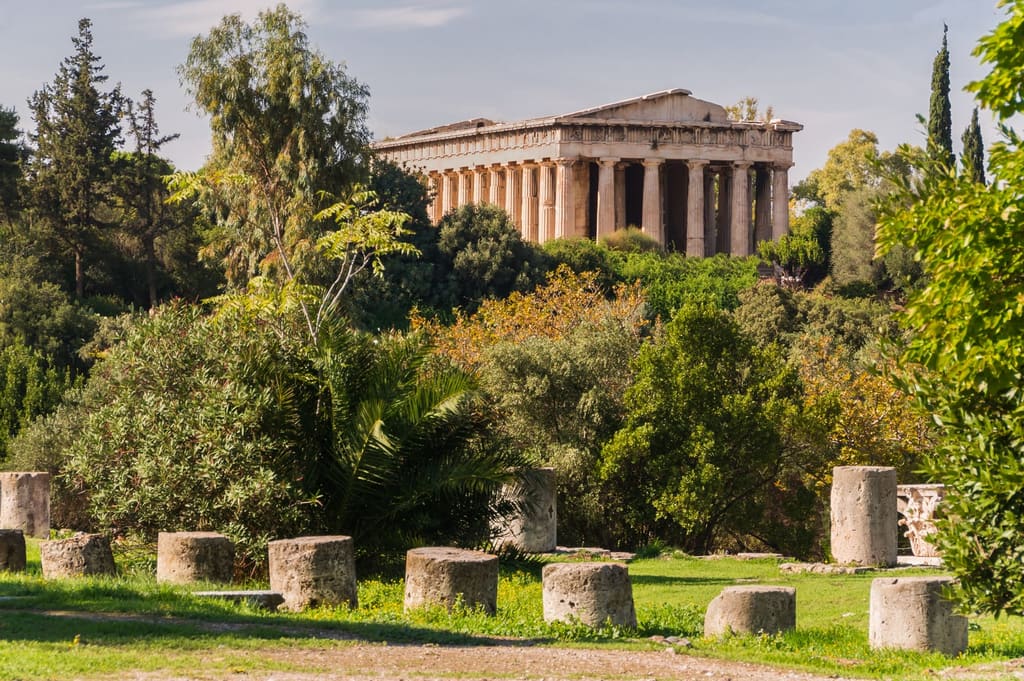
The Temple of Hephaestus seen from the Ancient Agora, Athens.
The Ancient Agora was the civic heart of classical Athens, and one of the best-preserved temples in Greece stands above it: the Temple of Hephaestus. The rebuilt Stoa of Attalos along the east side houses the site museum. The main entrance is at Adrianou 24, a 1.4 km walk from the Acropolis Museum along the pedestrian path that wraps around the hill.
The Agora's destination page lists 18:30 closing through 15 October, 18:00 from 16 to 31 October, and 17:00 from November; check the current hours on Hellenic Heritage before you go, because a 2026 notice mentions longer hours until further notice. Last entry is 20 minutes earlier. A full ticket costs €20.
If you still have energy, the Roman Agora is 5 minutes away. I keep it for day three, because in winter it closes at 15:00.
20:30 Dinner in Kolonaki
Athenians eat late; book nothing before 20:30 and you will eat with the locals rather than with the tour groups. From the Agora it is 1.8 km back to Kolonaki Square, about 23 minutes on foot.
- Filippou, Xenokratous 19, the neighbourhood taverna since 1923, for cooked Greek dishes at around €10 to €17 a plate. Dinner is Monday to Friday from 19:30 (its own site, checked 10 October 2026); phone +30 210 721 6390.
- Le Rosé, Kapsali 3, a tiny bistro built around rosé wine, with a French and Japanese menu. Book, because the room is small (Facebook).
More options in where to eat like a local in Kolonaki.
Day 2: the National Archaeological Museum, Kolonaki and Lycabettus
| Time | Stop | Getting there |
|---|---|---|
| 08:30 | National Archaeological Museum | 22 minutes on foot from Kolonaki Square, or a taxi |
| 12:30 | Lunch in Kolonaki | Back on foot or by taxi |
| 14:30 | Museum of Cycladic Art or the Benaki | 3 to 7 minutes on foot |
| Sunset minus 1 hour | Lycabettus Hill | Funicular or footpath from Aristippou Street |
| 21:00 | Dinner in upper Kolonaki | Downhill |
08:30 The National Archaeological Museum
The National Archaeological Museum is the largest museum in Greece, with around 11,000 objects on display, and for me the best reason to give Athens a second day. Look for the gold Mycenaean finds, including the so-called Mask of Agamemnon, the bronze god from Artemision and the Antikythera mechanism. Allow two to three hours.
It is 1.75 km from Kolonaki Square, about 22 minutes on foot through the university district, which is as quick as the metro. From May to October it opens at 08:00; from November at 08:30, and it then closes at 15:30. On Tuesdays it opens only at 13:00, so swap days two and three if your second day is a Tuesday.
12:30 Lunch in Kolonaki
Back in the neighbourhood, lunch is where Kolonaki is at its most local. Filippou serves lunch from 12:30, Monday to Saturday. Oikeio, a small bistro at Ploutarchou 15 (Facebook), cooks traditional dishes with a light modern touch and puts tables on the pavement in summer.
14:30 The Museum of Cycladic Art or the Benaki
Two of the best small museums in Athens are on Kolonaki's doorstep, and both are closed on Tuesdays.
- Museum of Cycladic Art, 7 minutes from the square: the white marble figurines that look startlingly modern. €12 for the permanent collection; open to 20:00 on Thursdays.
- Benaki Museum of Greek Culture, Koumbari 1, 3 minutes from the square: Greek history from prehistory to the 20th century in one neoclassical mansion, with its own café-restaurant. €12, and free for the permanent collection on Thursdays from 18:00 to midnight.
Pick one. Two museums in one day is enough for most people.
Sunset: Lycabettus Hill
Lycabettus, 277 metres, is the highest hill in central Athens and rises straight out of upper Kolonaki. The funicular's lower station is at Aristippou 1, about 600 metres and ten minutes uphill from Kolonaki Square, past Dexameni Square. It runs from 09:00 to 02:30 and costs €10 one way, €13 return (operator's site, checked 10 October 2026). The footpath from the same spot takes 20 to 40 minutes. My advice: walk up, ride down.
Be on the summit terrace by the chapel of Agios Georgios 30 to 45 minutes before sunset. In mid-October the sun sets at about 18:48, and when the clocks go back on 25 October it jumps an hour earlier. My Lycabettus guide has the sunset times month by month, which way the sun really goes down, and the summer fire-risk closures, when the city shuts the hill.
21:00 Dinner in upper Kolonaki
You come down the hill straight into the quietest, prettiest part of the neighbourhood. Dexameni, the open-air café on the square of the same name, does simple meze and cold beer under the trees (Instagram), and in summer Cine Dexameni shows films under the stars next door. For a drink afterwards, see drinks in Kolonaki.
Day 3: Roman Athens, the Stadium and Syntagma
| Time | Stop | Getting there |
|---|---|---|
| 08:30 | Coffee in Kolonaki | |
| 09:30 | Hadrian's Library and the Roman Agora | Metro from Syntagma to Monastiraki, one stop |
| 11:30 | Temple of Olympian Zeus | About 13 minutes on foot through Plaka |
| 12:45 | Panathenaic Stadium | About 13 minutes on foot |
| Afternoon | National Garden and the changing of the guard | Syntagma, 8 minutes from Kolonaki Square |
| 21:00 | Your best dinner of the trip |
08:30 A Kolonaki morning
Start slowly, the way the neighbourhood does. Me Kolonaki, Kapsali 10, is where I have my morning coffee most days: a freddo cappuccino, banana toast, a green and unhurried room. Get there before 10:00, when the tables are easy. My other favourites are in our favourite cafés in Kolonaki.
If today is a Sunday, plan around 11:00 at Syntagma instead (see below), and do the Roman sites after.
09:30 Hadrian's Library and the Roman Agora
From Syntagma, line 3 takes you one stop to Monastiraki. Hadrian's Library is beside the station, and the Roman Agora, with the eight-sided Tower of the Winds, is 4 minutes further. Each costs €10 and takes about 40 minutes. They are much quieter than the Acropolis, and this is where you see that Athens kept growing long after Pericles.
11:30 The Temple of Olympian Zeus
Walk 1.1 km through the lanes of Plaka to the Olympieion, one of the largest temples of antiquity; a handful of its giant columns still stand. Hadrian's Arch is beside the entrance. A full ticket is €20, so if you are short on time or money, you can see a good deal of it through the fence from Vasilissis Olgas Avenue.
12:45 The Panathenaic Stadium
Another 1.1 km brings you to the Panathenaic Stadium, built entirely of marble and the venue of the first modern Olympic Games in 1896. The €12 ticket includes a visit to the Stadium's museum, and children up to 6 enter free. In the heat, go early or late: the stands are white marble with no shade. From here it is 1.2 km, 15 minutes, back to Kolonaki Square for lunch.
Afternoon: the National Garden and the changing of the guard
The National Garden behind Parliament is the shadiest place in central Athens and connects the Stadium side with Syntagma. Come out at the top, by Parliament, for the guard.
The Evzones of the Presidential Guard stand at the Tomb of the Unknown Soldier day and night, and the pairs change every hour, on the hour. On Sundays at 11:00 a full company marches from its barracks to the monument for the formal ceremony (Presidency of the Hellenic Republic, checked 11 October 2026). The Sunday crowd is large, so arrive by 10:40 for a view.
21:00 Your best dinner of the trip
By the third night you know the city a little. Book the restaurant you have been saving, stay out late like an Athenian, and walk home through quiet streets. My where to eat like a local in Kolonaki guide sorts the neighbourhood by time of day and budget.
A fourth day: day trips from Athens
If you have a fourth day, use it to leave the city:
- Cape Sounion and the Temple of Poseidon, on the coast south-east of Athens, for sunset over the sea. Go with a hire car, a taxi or an organised tour.
- Delphi, the sanctuary of Apollo on the slopes of Mount Parnassus: a long, rewarding full day, best with a car or a tour.
- A Saronic island: Aegina, Poros or Hydra by ferry from Piraeus. Metro line 3 runs from Syntagma to Piraeus without a change. If you are heading to the islands for longer, where to stay in Athens before a ferry covers the ports and early departures.
With only three days I would keep you in the city. Our best time to visit Athens guide helps if you are still choosing dates.
Getting around between the stops
On foot from Kolonaki Square
| To | Distance | On foot |
|---|---|---|
| Syntagma Square and metro | 650 m | 8 minutes |
| Evangelismos metro (line 3) | 730 m | 9 minutes |
| Benaki Museum | 210 m | 3 minutes |
| Museum of Cycladic Art | 530 m | 7 minutes |
| Lycabettus funicular | about 600 m | 10 minutes, uphill |
| Panathenaic Stadium | 1.2 km | 15 minutes |
| National Archaeological Museum | 1.75 km | 22 minutes |
| Acropolis, south slope entrance | 1.7 km | 21 minutes |
| Acropolis, main west gate | 2.1 km | 26 minutes |
Kolonaki Square itself is currently fenced off as a worksite for the new metro line 4, whose Kolonaki station Hellenic Metro is targeting for September 2032.
By metro
Syntagma (lines 2 and 3) and Evangelismos (line 3) are the two stations for Kolonaki; my getting around Athens guide covers tickets and lines. Line 3 is having its rails replaced in stages, and on Sunday to Thursday nights one stretch closes at 21:40. On 11 to 15 and 18 to 22 October 2026 it is Ambelokipi to Halandri, and the last through trains to and from the airport run at 21:06 and 21:10 (Athens Transport, 10 October 2026). Check STASY's announcements for the stage in force when you travel, and keep a taxi as the late night fallback.
From the airport, line 3 runs direct to Syntagma and Evangelismos in about 40 minutes; the airport ticket costs €9 (OASA fares, checked 10 October 2026).
By taxi
Taxis in Athens are yellow and licensed, and the easiest way to get one is through a ride app that takes your card:
| App | What it books | iPhone | Android |
|---|---|---|---|
| Uber | Licensed taxis (in Greece) | iPhone | Android |
| Bolt | A ride | iPhone | Android |
| FREENOW by Lyft | Licensed taxis | iPhone | Android |
| Lemon | Licensed taxis | iPhone | Android |
To phone for one instead: Parthenon +30 210 532 3300 or Kosmos +30 210 411 8300 (both can be called from a foreign phone). Kosmos also has the short number 18300, from a Greek mobile. Between the airport and the city centre, taxis charge a flat fare, per car, of €50 by day and €65 at night (00:00 to 05:00), in force since 18 September 2026. Taxis are required by law to accept cards, but ask before you get in.
Honest host notes
- Go early or go late. From May to September, do the outdoor sites at opening or in the last two hours. Midday is for museums, lunch and shade.
- Shoes with grip, not new ones. The marble on the Acropolis and the old paving in Plaka are slippery, even when dry.
- Carry water in the warm months, and a hat. There is little shade on the Acropolis or at the Stadium.
- Check the calendar against the list of days that change the plan above, especially Tuesdays, Sundays and the start of the winter hours on 1 November.
- Do not over-schedule dinner. Book for 20:30 or later and you will eat better.
Where to stay for this itinerary
Every plan above assumes a central base you can walk back to, because the biggest time-saver in Athens is not a faster route, it is not needing a taxi at the end of a long day. Plaka and Koukaki are the classic first-timer choices for being close to the Acropolis. I host in Kolonaki, so weigh my bias: it is the quieter, residential alternative, 8 minutes on foot from Syntagma, with the National Archaeological Museum, the Cycladic, the Benaki and Lycabettus all within walking distance, and calm streets to come home to. Kolonaki vs Plaka vs Koukaki sets out the honest comparison, and where to stay in Athens covers the rest of the city.
Our one-bedroom apartment on Deinokratous is about 100 metres from the Lycabettus funicular, which makes the day two sunset a decision you can take at the last minute. Our two-bedroom near Evangelismos is beside the metro, with line 3 direct to the airport, which suits families and anyone doing the fourth-day trip to Piraeus. You can see both apartments or book direct, and I am happy to look at your dates and tell you which day to put where.
Where to go next
- The neighbourhood you will keep coming back to: our local's guide to Kolonaki, and the story of Kolonaki, with its history and an interactive map.
- Choosing a base: where to stay in Kolonaki explains which side of the hill suits which trip.
- Staying longer: a month in Kolonaki is what life here looks like after the sights.
- Peace of mind: is Athens safe? answers the questions first-time visitors ask.
- Food and drink: eat like a local in Kolonaki, favourite cafés and drinks in Kolonaki.
Last updated 11 October 2026. Photos: Giles Laurent / Wikimedia Commons / CC BY-SA 4.0; Jean Housen / Wikimedia Commons / CC BY-SA 4.0; Public domain (Jebulon).